
Tree Preservation Orders (TPO’s)
This article explains Tree Preservation Orders (TPO’s).
Tree Preservation Orders (TPO’s) are commonly used by councils to protect certain trees within their area of authority found on someone else’s land. If they wish to protect a tree, the council can send a TPO to the landowner and explain the reason for making the order – the landowner has the right to comment.
If a tree is protected via a TPO, the council must consent before any work can be carried out on a tree. Landowners have the right to appeal to the Secretary of State within 28 days if they have a planning permission application refused due to reasons relating to a TPO.
Applications concerning protected trees are handled differently to standard planning permission, with one major change being that these applications can be made without a fee. However, they still require the inclusion of paperwork such as appropriate forms and a diagram outlining the trees you wish to work on. As with standard planning applications, your application will be advertised by the council. However, neighbours will only be notified on a case-on-case basis.
The arboricultural officer at the council responsible for your application may wish to visit the site in question to gain a better understanding of your application and the tree(s) that will be affected. The standard 8 week time target applies to applications to work on protected trees.
If you are looking to remove a protected tree entirely, you will need a report from a qualified arboriculturalist to support your application. DWG Plans Ltd can supply contact details for a qualified arboriculturalist.
When can a tree be worked on?
Wilfully cutting, uprooting, damaging or destroying a protected tree without the council’s permission is a criminal offence. However, certain expectations to this law apply. These are:
- Cutting down a tree when it is already dead
- Cutting down a tree when the whole tree presents “an immediate risk of serious harm”
- Pruning part of a tree that presents “an immediate risk of serious harm”
- Removing dead branches form a living tree
- Preventing or controlling a “legal nuisance”
- When requested by an organisation listed in the council’s regulations
- When it is in the interests of national security
- Where the tree is a fruit tree being pruned in accordance with good horticultural practice, or where the tree is a commercial orchard.
- Cutting down trees in accordance with a grant or felling licence obtained from the Forestry Commission
- Where the tree is directly obstructing development for which full planning permission has been granted (not including permitted development)

When obliged under an Act of Parliament previously, the exception in the legislation also applied to the felling of dying trees. However, since 2012 this is no longer an exception unless the tree presents an urgent, serious safety risk i.e. “an immediate risk of serious harm”.
Call DWG Plans on 0800 688 9345 or get in touch online today.
More Articles

Permitted Development Rights for Air Conditioning Reddit
As temperatures rise and energy-efficient heating and cooling systems become more common, air conditioning and air source heat pump installations are increasingly being added to both homes and commercial buildings.
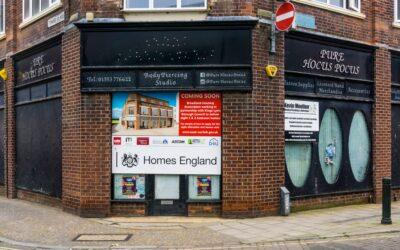
Change Of Use From Commercial To Residential Class MA
In the UK, certain commercial-to-residential conversions can be carried out under permitted development rights (PDR), specifically under class MA of the General Permitted Development Order (GDPO) 2015 (as amended).
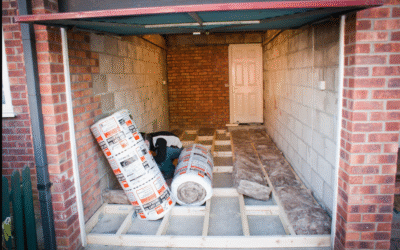
Transform Your Home With A Garage Conversion
Most homeowners nowadays don’t use their garage to park a car in as cars have now become to large to fit into the existing garage. The most beneficial way to increase the size of the property and at a low cost is to convert this essentially wasted space into an additional reception room or bedroom.